
7 min read
The renewable energy sector represents one of the fastest-growing investment opportunities in modern business. However, this explosive growth has also attracted sophisticated scammers who exploit entrepreneurs' enthusiasm for green technology and sustainable profits.


Legal GPS Pro
Protect your business with our complete legal subscription service, designed by top startup attorneys.
- ✅ Complete Legal Toolkit
- ✅ 100+ Editable Contracts
- ✅ Affordable Legal Guidance
- ✅ Custom Legal Status Report

As renewable energy investments surge past $1.8 trillion globally, fraudulent schemes have evolved beyond simple Ponzi structures to include complex fake development projects, phantom power purchase agreements, and elaborate technology licensing scams. These schemes specifically target business owners seeking both financial returns and environmental impact.
Understanding how to identify legitimate opportunities while avoiding costly legal pitfalls has become essential for any entrepreneur considering renewable energy investments. The key lies in recognizing warning signs early and implementing proper contract protections before committing significant capital.
The Explosive Growth of Renewable Energy Investments
The renewable energy investment landscape has fundamentally shifted over the past decade. Solar installations alone have grown by over 2,400% since 2010, while wind energy capacity has tripled during the same period.
This rapid expansion has created legitimate opportunities for business investors at every scale. Commercial solar installations now offer payback periods of 6-8 years in most markets. Wind farm partnerships provide steady long-term returns for qualified investors. Even smaller-scale projects like community solar gardens offer attractive risk-adjusted returns.
However, this legitimate growth has also created perfect cover for sophisticated investment scams. Fraudsters leverage real industry terminology, cite actual market statistics, and even reference legitimate projects to build credibility with potential victims.
The most dangerous scams target business owners who understand the potential of renewable energy but lack specific technical knowledge about project development timelines, regulatory requirements, or realistic financial projections.
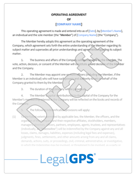
Renewable Energy and Battery Storage Agreement
Renewable Energy Agreement for system specs, milestones, payments, and maintenance.
Trusted by 1,000+ businesses to safeguard their LLCs.
Recognizing Red Flags in Green Energy Investment Opportunities
Successful renewable energy investments require extensive planning, regulatory approval, and substantial upfront development costs. Legitimate projects typically take 18-36 months from initial development to operational status.
Scam operations bypass these realities by promising immediate returns or claiming projects are "shovel-ready" without proper documentation. They often pressure investors with limited-time offers or exclusive access claims designed to prevent careful evaluation.
Another common red flag involves guaranteed returns that exceed market standards. While legitimate renewable energy investments can provide excellent returns, they remain subject to weather patterns, energy market fluctuations, and regulatory changes that make guarantees impossible.
Example – The Solar Farm Ponzi Scheme That Cost Investors $45 Million
Green Energy Solutions Inc. promised investors 18% annual returns through participation in California solar farm developments. The company claimed to have secured prime locations with guaranteed power purchase agreements from major utilities.
Company presentations included detailed financial projections, professional-looking environmental impact studies, and testimonials from early investors receiving promised payments. The operation attracted over 600 investors, primarily small business owners and entrepreneurs seeking sustainable investment opportunities.
Investigators later discovered that Green Energy Solutions had never secured actual development permits for any solar projects. The company used new investor funds to pay earlier investors while founders diverted millions to personal accounts. When the scheme collapsed, investors lost approximately $45 million in total investments.
The case highlighted how scammers exploit legitimate industry terminology and documentation to create convincing presentations that fool even sophisticated business owners who conduct surface-level due diligence.
Pro Tip – Essential Verification Checklist for Green Energy Projects
Before investing in any renewable energy project, verify five critical elements independently. First, confirm that the development company holds valid permits and licenses through state energy regulatory websites rather than relying on company-provided documentation.
Second, verify land ownership or lease agreements through county property records. Many scams claim access to prime locations without actual legal rights to develop those sites.
Third, independently confirm any claimed power purchase agreements with the utilities mentioned. Most utilities maintain public databases of contracted renewable energy projects that allow verification of legitimate agreements.
Critical Contract Components for Renewable Energy Investments
Legitimate renewable energy investment contracts must address specific technical, financial, and legal requirements that distinguish them from general investment agreements. These contracts typically run 20-40 pages and include detailed specifications for equipment, performance guarantees, and operational responsibilities.
Key contract sections should cover project development milestones with specific deadlines and completion criteria. Legitimate developers understand that renewable energy projects face regulatory hurdles and equipment delays, so contracts include realistic timelines and contingency plans for delays.
Financial terms must align with industry standards for similar projects in comparable markets. While renewable energy can provide excellent returns, legitimate projects factor in development risks, operational costs, and market variables that prevent unrealistic profit guarantees.
Performance monitoring and reporting requirements protect investor interests by establishing clear metrics for project success and creating accountability mechanisms throughout the project lifecycle.
Example – How Poor Wind Farm Contracts Led to $2.3 Million in Losses
Midwest Wind Partners offered investment opportunities in Iowa wind farm development through simplified contracts that emphasized high returns while minimizing legal complexity. The company attracted investors with streamlined documentation and fast approval processes.
The investment contracts lacked specific performance metrics, development milestone requirements, or detailed financial reporting obligations. Investors received quarterly updates with limited financial detail and no independent verification of project progress.
When wind installation faced unexpected delays and cost overruns, investors discovered their contracts provided no meaningful recourse options. The company had structured agreements to limit investor rights while maintaining maximum flexibility for project changes and timeline extensions.
By the time investors sought legal intervention, project costs had exceeded budgets by 180% and completion timelines had extended beyond economically viable parameters. Investors ultimately lost $2.3 million when the project was abandoned due to changed market conditions and regulatory challenges.
Conducting Proper Due Diligence Before Signing
Effective due diligence for renewable energy investments requires verification of technical, financial, and legal elements that may not apply to traditional business investments. This process typically takes 30-60 days for legitimate projects with proper documentation.
Technical due diligence should include independent verification of site assessments, environmental studies, and equipment specifications. Many scams provide impressive technical documents that don't withstand professional scrutiny from qualified engineers or energy consultants.
Financial verification requires independent confirmation of project costs, market pricing assumptions, and revenue projections through industry databases and comparable project analysis rather than relying solely on developer-provided information.
Legal verification must confirm proper permits, land rights, regulatory compliance, and contractual relationships with utilities or other off-take partners through official government and utility sources.
Pro Tip – Financial Background Check Essentials
Research investment sponsors through multiple databases including state business registrations, professional licensing boards, and litigation records. Legitimate renewable energy developers typically have extensive track records with verifiable completed projects and industry references.
Check for any regulatory actions or customer complaints through state securities commissions, Better Business Bureau records, and industry association databases. Many renewable energy scams involve operators with histories of securities violations or consumer complaints in related industries.
Verify claimed expertise through professional associations, university affiliations, and industry conference participation. Legitimate developers maintain active involvement in renewable energy industry organizations and continuing education programs.
Example – How Thorough Vetting Saved a $500K Solar Investment
Pacific Solar Ventures approached restaurant chain owner Jennifer Martinez with an opportunity to invest $500,000 in Nevada solar installations that promised 15% annual returns through long-term utility contracts.
Before signing, Martinez conducted comprehensive background checks on the company principals, verified claimed utility relationships through Nevada Power Company, and retained an independent solar engineer to review technical specifications and site assessments.
The background investigation revealed that Pacific Solar's lead developer had previously been involved in a failed solar project in Arizona that resulted in investor losses. The utility verification process showed no record of the claimed power purchase agreements despite company documentation suggesting confirmed contracts.
Martinez's independent engineer identified significant flaws in the proposed installation design and raised concerns about projected energy production numbers that exceeded realistic expectations for the claimed sites.
Based on these findings, Martinez declined the investment opportunity. Pacific Solar Ventures collapsed eight months later when investigators discovered the operation was using new investor funds to pay earlier investors without developing any actual solar projects.
Building Legal Protections and Exit Strategies
Renewable energy investment contracts should include specific protections that account for the unique risks of energy project development. These protections go beyond standard investment safeguards to address technical performance, regulatory changes, and market fluctuations.
Performance guarantees must include specific energy production targets with penalties for underperformance and clear remedies for technical failures. Legitimate developers understand their equipment capabilities and market conditions well enough to provide meaningful performance commitments.
Regulatory protection clauses should address potential changes in government incentives, environmental regulations, or grid connection requirements that could affect project viability. These clauses typically include cost-sharing mechanisms and exit options if regulatory changes make projects uneconomical.
Exit strategies become particularly important in renewable energy investments due to long project timelines and changing technology landscapes. Well-structured contracts include buyout options, transfer rights, and liquidation procedures that protect investor interests throughout the project lifecycle.
Example – Biomass Investment Recovery Through Smart Contract Terms
Green Valley Energy offered biomass facility investment opportunities that included comprehensive performance guarantees and exit strategy provisions. When initial operations fell short of projected energy output, investors activated contract protection mechanisms successfully.
The investment contract included specific energy production targets with monthly monitoring requirements and automatic penalties for sustained underperformance. When the facility consistently produced 20% below guaranteed levels, investors triggered penalty payments and accelerated review processes.
Exit strategy provisions allowed investors to force facility sale or equipment liquidation if performance problems persisted beyond six months. These contractual rights provided leverage for investors to negotiate operational improvements and management changes.
Ultimately, investors recovered 95% of their initial investment through a combination of penalty payments and facility sale proceeds facilitated by the contract's exit strategy mechanisms. Without these protections, investors likely would have faced total losses when the biomass facility proved uneconomical.
When Professional Legal Review Becomes Essential
Renewable energy investment contracts contain technical and regulatory complexities that require specialized legal expertise beyond general business law. Investment amounts above $50,000 typically justify professional legal review costs given the potential for significant losses.
Legal review becomes mandatory when contracts involve complex partnership structures, multi-party agreements, or sophisticated financing arrangements that create ongoing legal obligations beyond the initial investment.
Professional evaluation also becomes essential when investments involve new or unproven technologies, foreign development partnerships, or projects requiring extensive regulatory approval processes that create elevated legal risks.
Early legal involvement often costs less than attempting to resolve problems after signing inadequate contracts. Prevention-focused legal spending typically runs 1-3% of investment amounts while post-signing legal disputes can consume 25-50% of invested capital.
Pro Tip – Calculating Legal Costs vs. Investment Risk
Evaluate legal review costs against potential loss exposure using a simple risk-adjusted calculation. Multiply your total investment amount by the probability of significant problems (typically 15-25% for renewable energy investments) to determine your expected loss exposure.
Compare this expected loss figure to legal review costs, which typically range from $5,000-$15,000 for comprehensive renewable energy investment evaluation. Most investments above $100,000 justify professional legal review based purely on loss prevention economics.
Factor in the difficulty and cost of post-signing legal remedies when evaluating upfront legal expenses. Renewable energy investment disputes often involve technical expert witnesses and complex regulatory issues that can cost $50,000-$200,000 to resolve through litigation.
Protecting Your Renewable Energy Investment Future
The renewable energy sector offers legitimate opportunities for entrepreneurs seeking both financial returns and environmental impact. However, success requires careful evaluation of investment opportunities using proper legal and financial due diligence procedures.
Smart investors combine enthusiasm for renewable energy with healthy skepticism about investment claims that seem too good to be true. The most successful renewable energy investments come from thorough evaluation of realistic projects with proper legal protections in place.
Legal GPS Pro provides comprehensive contract templates and legal guidance specifically designed for renewable energy investments and green technology business ventures. Our specialized resources help entrepreneurs evaluate opportunities and structure investments with appropriate legal protections.
Professional legal review remains the best protection against renewable energy investment scams that continue evolving to exploit market enthusiasm. Investing in proper legal guidance upfront costs far less than attempting to recover losses from fraudulent schemes later.
The renewable energy revolution offers substantial opportunities for prepared entrepreneurs. With proper legal protections and careful due diligence, business owners can participate in this growing market while protecting their capital from sophisticated investment scams.
Legal GPS Pro
Protect your business with our complete legal subscription service, designed by top startup attorneys.
- ✅ Complete Legal Toolkit
- ✅ 100+ Editable Contracts
- ✅ Affordable Legal Guidance
- ✅ Custom Legal Status Report
|
Premium Template
Single-use Template |
Legal GPS Pro
Unlimited Access, Best Value |
|
|
| Choose Template | Learn More |
| Trusted by 1000+ businesses | |